

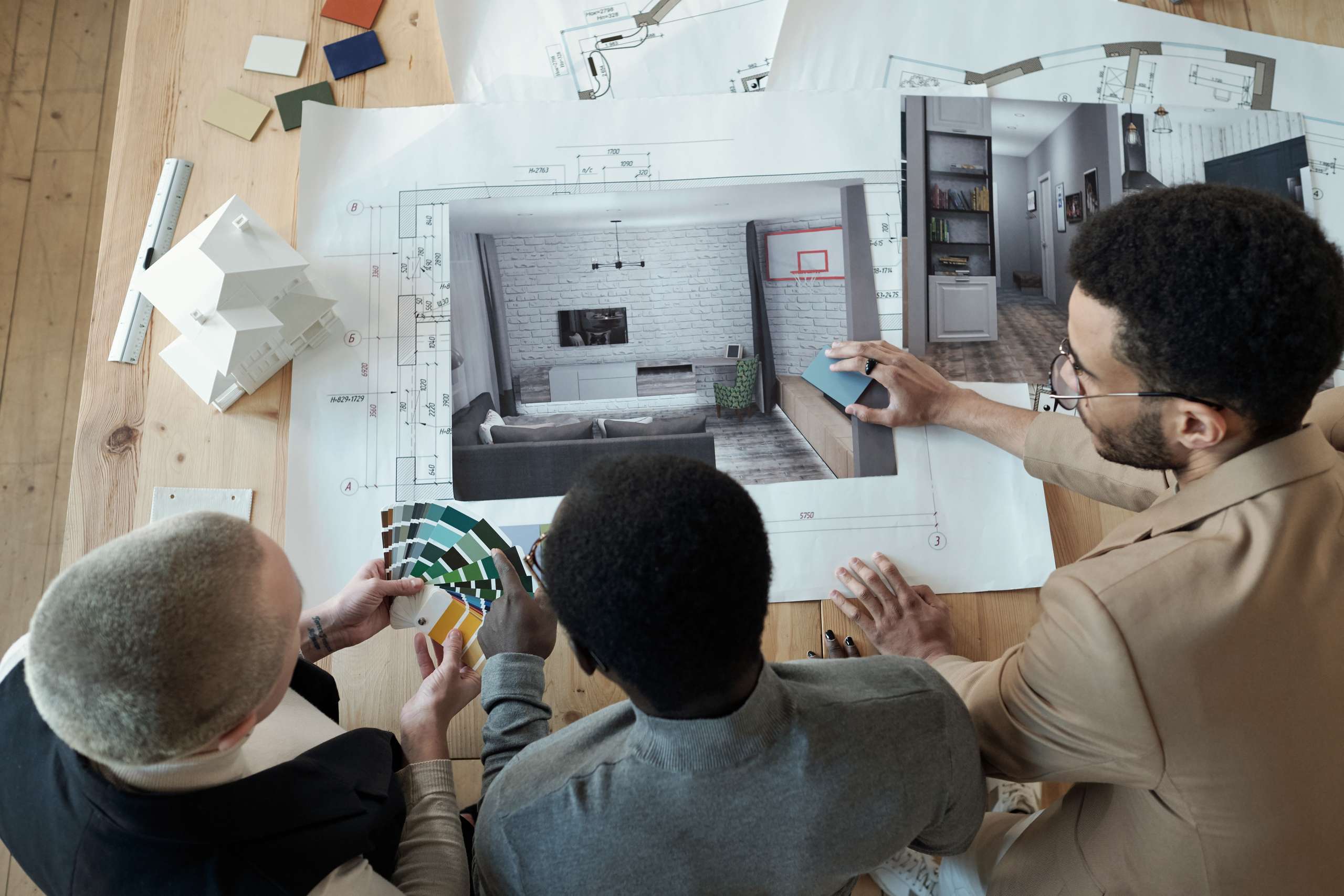
What sets apart a well-designed interior from a simply beautiful one? One key factor is what we call a designer’s language. Understanding proportion, balance, and the use of lighting is key to a well-designed interior, but these elements can be executed in a multitude of ways, depending on the designer’s language. A designer’s language is the culmination of how they choose to handle space planning, materials, color palette, etc. It is the voice that shines through in the spaces they design and is unique to every designer. A well-designed space is one that uses the principles of design to create a cohesive space, while a beautifully designed space is one that is not only well-designed but also reflects a specific voice or language.
So how does one establish their language? Typically, an interior designer’s early work will show a mixture of experimentation. We may try pairing different materials and colors together to see the effect or arrange furniture in a way that feels right but may not understand why. We may realize after the fact that the reason the space feels off is because of a scale issue or a circulation problem. It isn’t until after several projects that a designer begins to see a pattern emerging of the things they like and are drawn to. It is at this point that a language begins to form.
We are all influenced by different designers, architects, artists, places, and experiences that shape our language. Travel, nature, architecture, and art are all ways that influence the way we perceive and experience spaces. It is how we interpret those influences and use them to shape our designs that form our language. A designer’s language isn’t just about emulating designs they like, but rather about using those references to create something new and original. Once a designer can identify the patterns of their likes and dislikes, they can hone in on them and begin to design spaces that look cohesive.
Consistency is key in the spaces a designer creates. A designer’s language is consistent from project to project but still evolves over time. Just because a designer has established their language doesn’t mean that they need to design the same type of space for every client. Different projects allow designers to explore different aspects of their language. If a designer identifies that they have a strong affinity for bright colors, minimal ornamentation, and graphic patterns, they may choose to exploit those characteristics on certain projects. On others, they may allow those elements to play a more subtle role. Consistency will always be present but the level of consistency will vary from project to project.