

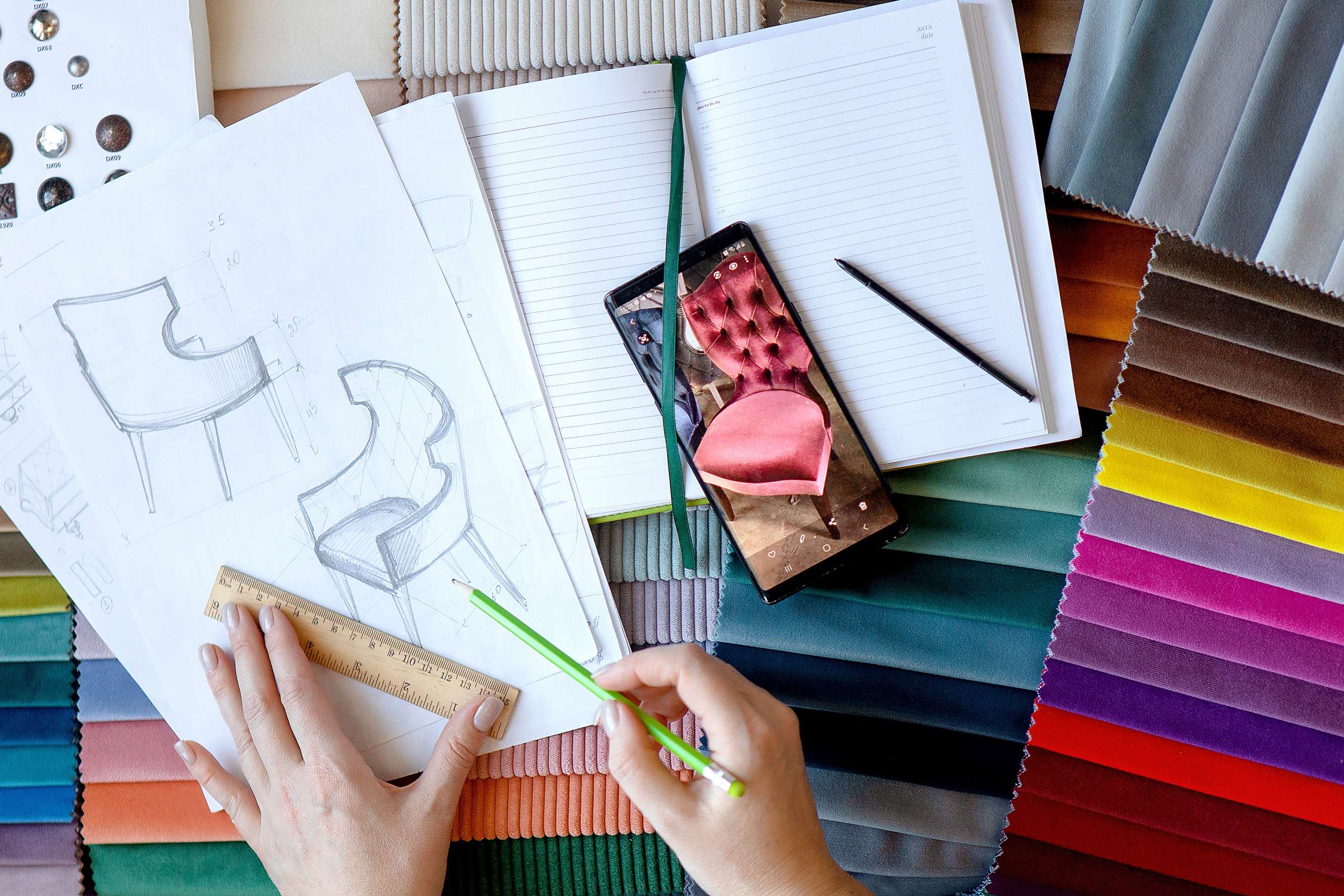
How To Think Like An Interior Designer Photo: istockphoto.com Now that we’ve covered the basics of what an interior designer does, how do you actually become one? Let’s start with the fundamentals of design: learning to see a space in three dimensions. Many of us move through our homes without much thought to the way they’re laid out or how furniture is arranged. Designers, though, have a different eye for it. They see proportions, geometry, and negative space. They can walk into a room and envision how it might look with different furniture, a fresh coat of paint, or a reconfigured layout.
They see possibility in an unremarkable space. One of the simplest things you can do to start thinking like an interior designer is to pay more attention to your own space. Instead of just being in the space, observe the walls and the windows, the position of the furniture and the lamps, the way the light falls. You can also start to notice how you feel in the space. Is the ceiling too low? Is the room a comfortable temperature? Can you move around easily? Once you start paying attention to the physical properties of the rooms in your home or office, you’ll become more attuned to how to work within them. A simple way to think about visual flow is to think about focal points. Every room has a natural focal point, whether it’s a window, a fireplace, or an interesting architectural detail.
This is the thing that your eye is drawn to when you enter the room, and it’s the anchor around which you can arrange the rest of the furniture and decor. To create a peaceful room, you want to lead the eye easily around the space, stopping at various focal points along the way. You don’t want to have too many competing focal points or too much clutter, which can make the eye jump around in a distracting way. Pay attention to the visual flow of a room. Do your eyes wander easily around it, or is there too much clutter or competition for attention? Color, of course, is a key element of design. But it’s also one of the trickiest to master.
While there are endless rules about color, how to choose colors that go together, how to use the 60-30-10 rule, how to pick colors that make a small room look bigger, the truth is that color is incredibly subjective. One color can have a completely different effect depending on the lighting of the room, the size of the space, the texture of the walls and furniture, and so on. So how do you pick colors for a room? The first step is to consider how you want the room to feel. Are you going for calm and serene or bold and playful? What activities will happen in the room, and how do you want the space to support those activities? Then, as with any design decision, the key is to experiment. Instead of going out and buying paint right away, try painting a swatch on the wall and living with it for a few days.
See how the color looks in the morning, in the middle of the day, and at night. Bring different colored throw pillows and blankets into the room to see how they look with the wall color. Remember, color is a system, not an event. It’s about how all the colors in the room work together, not just the individual colors themselves.
Finally, the most important thing you can do to think like an interior designer is to be curious. Don’t assume that a room has to be a certain way, just because that’s the way it is. Instead, imagine what would happen if you moved that chair over there, or hung a new piece of art on the wall, or swapped out the overhead lighting for a table lamp. As you practice thinking like a designer, you’ll start to see possibilities everywhere. You’ll begin to notice the way that a few simple changes can completely transform a room. The more you do it, the more intuitive it will become.